
People pick skincare products based on generic skin type labels ('oily,' 'dry,' 'combination') and influencer recommendations, then abandon most of what they buy because the results don't match the promise. Your skin is a reactive system that changes with season, stress, sleep, hormones, and water hardness, and the only way to learn what works is to track cause and effect over time.
Michael Tiffany
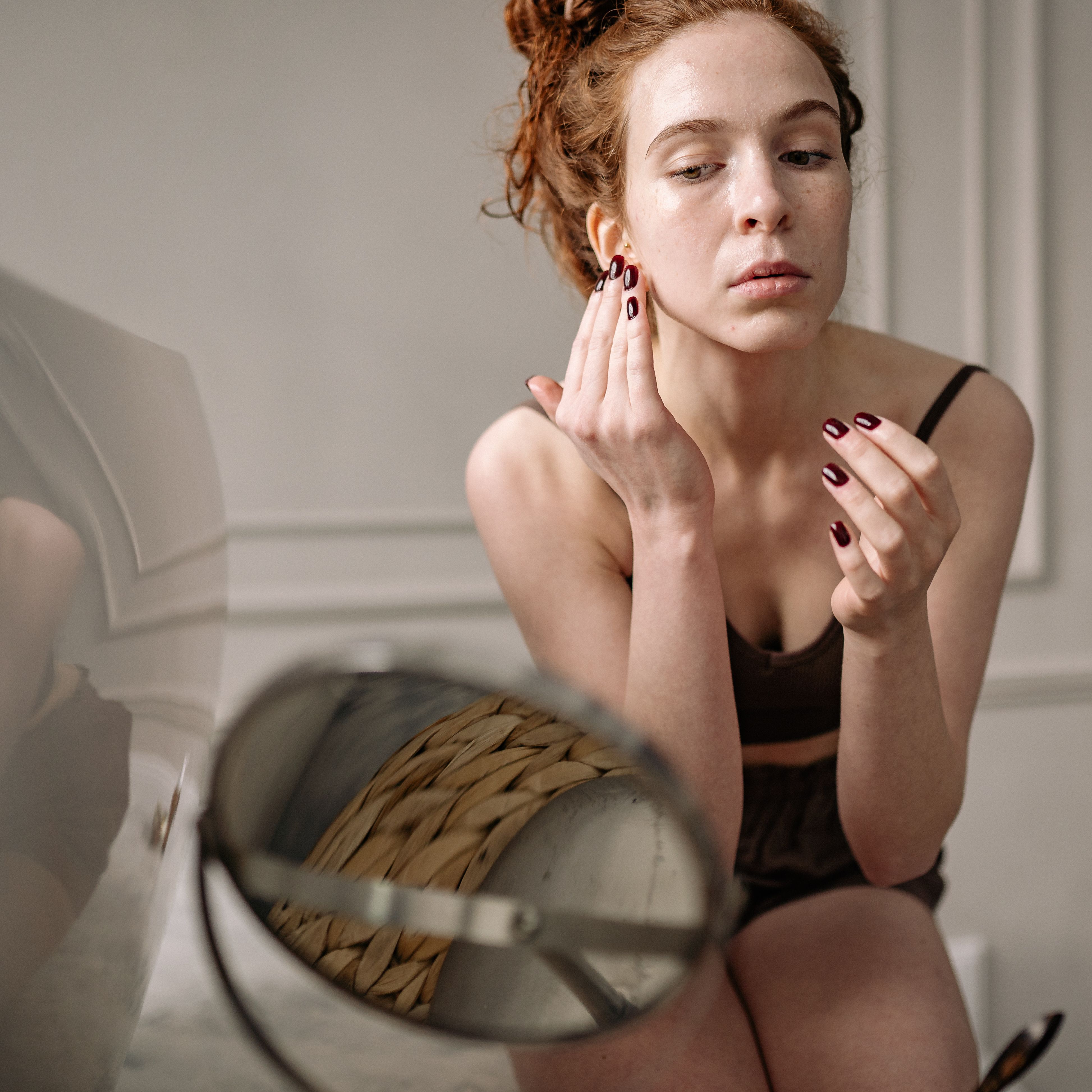
Somewhere in your bathroom there is a shelf, a drawer, or a bag full of skincare products you bought with optimism and stopped using within a month: the retinol serum that made your face peel, the cleanser that felt great for two weeks and then dried you out so badly you switched back to the old one, the moisturizer your friend raved about that broke you out along your jawline, the sunscreen that left a white cast so pronounced you looked like a mime and refused to wear it to work. Each of these abandoned products represents a preference you've already discovered through direct physical experimentation on the most visible surface of your body, and yet if someone asked you right now to describe your skincare preferences in a way an AI could use, you'd probably say something like "I have combination skin and I'm sensitive to fragrance," which communicates almost none of what you've learned.
The skincare industry's entire recommendation infrastructure runs on a classification scheme that sorts all human skin into four or five buckets, then matches each bucket to a set of products. This is roughly as useful as sorting all human feet into "wide" and "narrow" and then recommending shoes, especially since over 60% of adults assume their skin type is fixed for life when it actually changes with age, habits, and environment. Your skin is not a type; it is a reactive system that responds differently to different ingredients depending on your stress level, sleep quality, hydration, hormone cycle, the season, the humidity in your house, and whether you flew on a dry pressurized airplane last Tuesday. Teaching your AI agent about your skin means teaching it this web of cause and effect, which no quiz and no influencer recommendation can capture, but which you are already accumulating evidence for every time you wash your face.
Start the same way the wardrobe article started, by looking at what you've already got and sorting it into what works and what didn't.
Go through your bathroom and photograph every skincare and grooming product you currently own, including the ones buried in the back of the drawer. For each one, tell your agent three things: whether you use it regularly, occasionally, or not at all; what it's supposed to do; and what it actually does on your skin. The gap between the second and third is where all the learning lives.
"CeraVe Hydrating Cleanser. Use it every morning. It's supposed to be a gentle, non-stripping cleanser. On my skin, it does exactly what it says; my face feels clean without that tight, squeaky feeling I get from foaming cleansers. I've repurchased this three times. This is a keeper."
"The Ordinary Niacinamide 10% + Zinc 1%. Bought it because everyone on Reddit said it would shrink my pores. Used it for about three weeks. It made my skin texture worse, not better; I got small bumps across my forehead that went away within a week of stopping. The concentration was probably too high for me."
"Some SPF 50 from a brand I can't even remember. It was thick, greasy, pilled under makeup, and left a white cast. Used it twice. Never again."
Three products, three stories, and your agent now knows: you prefer non-foaming cleansers, high-concentration niacinamide causes a reaction on your skin, and sunscreen texture and cosmetic elegance matter enough to override sun protection compliance. That last point is particularly important because it reveals a hierarchy of values that no skin type quiz would surface: you will skip sunscreen entirely before you'll wear one that looks bad, which means your agent should prioritize cosmetically elegant SPF options above all other sunscreen attributes when recommending.
The wardrobe audit sorts items into categories. The skincare audit needs to go further, because skin is reactive in a way that clothing is not: the same product can work beautifully in January and cause breakouts in July, because your skin's oil production, hydration, and barrier function shift with the weather.
Tell your agent about the conditions under which products succeed or fail. "I can use this retinol twice a week in winter without irritation, but if I try it more than once a week in summer when my skin is already sensitized from sun exposure, I peel." "This heavy cream is perfect on flights and in winter, but during humid months it clogs my pores." "I break out along my chin every month around the same time, regardless of what products I'm using, which I think is hormonal."
These conditional observations teach your agent that your skincare preferences are not a static profile but a set of context-dependent rules, and they enable it to give meaningfully different recommendations depending on the time of year, your travel schedule, or your current stress level.
Skincare gets most of the attention in this domain, but grooming encompasses everything you do to maintain your physical presentation: haircuts, shaving or beard maintenance, nail care, dental hygiene habits, fragrance. These routines carry the same kind of preference data that's worth capturing.
"I get my hair cut every six weeks. The last barber cut it too short on the sides and I hated it for two weeks. I like a scissor cut on top, clippers on the sides no shorter than a number three, and I don't want product in it when I leave." That single observation teaches your agent your cut frequency, a specific failure (too short on sides), your technique preferences (scissors vs. clippers), your length threshold, and your styling preference (no product). The next time you need to brief a new barber, your agent can generate those instructions from memory.
"I've been using the same deodorant for ten years because every time I try a 'natural' alternative, it fails by 2pm. I don't care about the ingredient list; I care about whether I smell by the afternoon." That teaches the agent a hierarchy of priorities and a history of failed experiments, which means it should stop suggesting natural deodorant alternatives unless you explicitly ask.
After the audit, ask your agent two questions. First: "Based on what I've told you, what ingredients or product characteristics should I avoid?" If it can assemble a coherent avoid-list from your product stories (high-concentration niacinamide, foaming cleansers, thick sunscreens, greasy textures), it's been paying attention. Second: "If I wanted to add a vitamin C serum to my morning routine, what should I look for given what you know about my skin?" A good answer would reference your preference for lightweight textures, your history of sensitivity to high concentrations of active ingredients, and possibly the interaction between vitamin C and the other products you're already using. A generic answer about the benefits of vitamin C tells you the agent hasn't learned anything specific to you.
Run this test periodically as you add new products or as the seasons change. When a product that used to work stops working, tell your agent what changed: "The moisturizer that was fine all winter is now too heavy. My skin feels congested and I'm getting small bumps on my cheeks. I think the humidity went up." Each seasonal correction refines the model and makes the next transition smoother.
Do I need to know ingredients to make this work? Not at all. "The serum in the brown bottle with the dropper that made my face peel" is a perfectly usable description. Over time, as your agent correlates your reactions across products, it may identify ingredient patterns you haven't noticed ("the three products that caused irritation all contain denatured alcohol"). But you don't need to arrive with a chemistry vocabulary.
What about prescription skincare or treatments from a dermatologist? Include them in the audit with whatever information your dermatologist gave you. "I use tretinoin 0.025% every other night. My dermatologist prescribed it for fine lines. It took about six weeks for my skin to adjust, and I can't use it on the same night as my exfoliating toner without irritation." Your agent should treat prescriptions as fixed constraints, similar to the allergy tier in the food article: it should never suggest replacing or adjusting them without your explicit direction.
How is this different from skincare apps and quizzes? Most skincare tools recommend products based on your declared skin type and concerns, which is a starting point but ignores your actual experience with specific products. The approach here builds your agent's understanding from behavioral evidence: what you used, what happened, and what you did about it. It's the difference between a recommendation based on a category and a recommendation based on your personal history.
Should I include haircare, body care, and fragrance? Include anything where you have preferences worth remembering. If you've spent years finding the one shampoo that doesn't make your scalp itch, your agent should know about it. If you've developed a signature fragrance rotation, capture that too. The more of your grooming life your agent understands, the less you'll have to re-derive from scratch when a product gets discontinued or a routine needs to change.
Pull out three products you love and three you've abandoned. For each one, tell your agent what it is, what happened when you used it, and whether you'd use it again. Be specific about textures, reactions, and timelines, not about marketing claims or ingredient lists. That fifteen-minute conversation gives your agent a foundation for understanding your skin that years of quizzes and skin-type classifications never will.
