Biohacking without data is just guessing. Context connects your supplements, protocols, CGM data, blood work, sleep, and wearables into one system — so you can run real experiments on yourself and actually measure what works.
You're running experiments on yourself — nootropics, cold exposure, fasting protocols, red light therapy, supplement stacks, breathwork. But if you're not systematically tracking inputs alongside outcomes, you can't tell what's actually working versus what's placebo or coincidence.
Most biohackers end up with data scattered across a dozen apps: sleep in Oura, HRV in Whoop, glucose in a CGM app, blood work in a PDF, and supplement logs in a spreadsheet. The experiments are sophisticated, but the tracking infrastructure is duct tape.
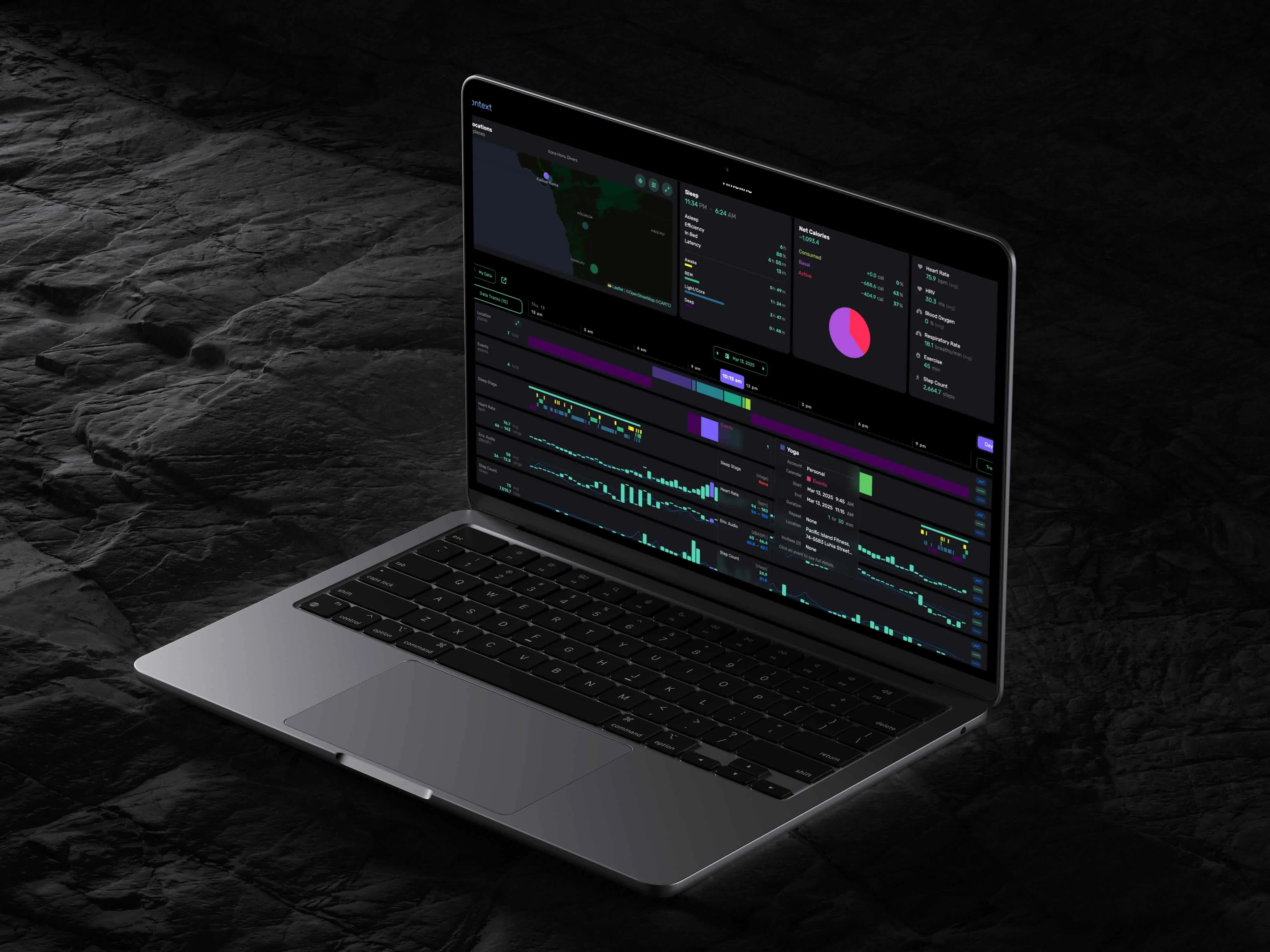
Context gives you a single surface where every input and every output lives on the same timeline, so you can run real N-of-1 experiments with real signal.
Link every device and app in your stack — Oura, Whoop, Apple Watch, CGMs, blood work services — through Apple Health. Context becomes the central hub for all your biometric data.
Track supplements, protocols, fasting windows, cold/heat exposure, light therapy, nootropics, and any other variable you're manipulating. Consistent logging is what turns anecdotes into evidence.
Pick one variable to test. Set a baseline period, an intervention period, and ideally a washout period. Context's timeline makes it easy to compare these windows side by side.
Compare your biometric data and subjective scores across experiment phases. Look for consistent shifts in sleep, HRV, glucose, energy, or cognitive performance. Then move on to the next experiment with a clearer baseline.
Separate signal from noise by comparing biometric data during on/off periods for any supplement or stack. See which ones produce measurable changes in sleep, HRV, or energy.
Compare different fasting windows (16:8, 20:4, OMAD, extended) against sleep quality, glucose stability, cognitive scores, and workout performance to find what works for your biology.
Track how cold plunges, saunas, or contrast therapy affect your HRV recovery, sleep architecture, inflammation markers, and next-day energy over weeks of consistent practice.
When you layer multiple interventions, Context helps you untangle which combinations produce synergistic effects and which ones cancel each other out or create unexpected trade-offs.
Context pulls in biometric data from your wearables and health devices — HRV, sleep architecture, resting heart rate, blood glucose, activity — and layers it alongside everything you log: supplements, protocols, fasting windows, cold/heat exposure, nootropics, subjective cognitive scores, energy, and mood.
You start a new nootropic stack on Monday. Context tracks your sleep quality, HRV trend, cognitive self-ratings, and energy levels automatically alongside the new intervention. After two weeks on, two weeks off, you can visually compare the periods. Did your deep sleep actually improve? Did HRV shift? Did subjective focus scores change, or did you just expect them to?
This is the difference between biohacking and wishful thinking — having the data to know what moved.
The best biohackers treat every protocol change like a controlled experiment. One variable at a time, consistent tracking, and enough time to see real effects rather than noise. Context is built for exactly this workflow.
Two weeks baseline, two weeks on, two weeks washout. Track sleep architecture, HRV, subjective cognitive scores, and energy. Compare periods to see if the intervention produced a genuine shift.
Test different fasting protocols while monitoring glucose (via CGM), ketone levels, sleep quality, workout performance, and cognitive clarity. Find your personal sweet spot for metabolic flexibility.
Systematically test interventions like temperature manipulation, light exposure timing, magnesium supplementation, or evening routines. Measure impact on deep sleep percentage, HRV, and next-day performance.
Compare cold exposure, breathwork, float tanks, or meditation against your HRV recovery curves, sleep quality, and stress resilience metrics over multi-week blocks.
Context's sharing features let you show your experiment results to other biohackers, functional medicine practitioners, or health coaches with real data. Shared Awareness provides a scoped, time-bound view of your experiment — useful for group challenges, coaching relationships, or contributing to citizen science projects.
Data Points Tracked
Accuracy Rate
Faster Insights
Data Points Tracked
Accuracy Rate
Faster Insights
Scattered data across apps, manual tracking, guesswork-based decisions, and no clear picture of what's actually working.
Unified dashboard, automated insights, data-driven decisions, and clear visibility into trends that matter most to you.

Fulcra was designed by people who get privacy and know the importance of an infrastructure solution that can be the secure private datastore for the rest of your life. Here data is yours, under your control, and only shared with the people and tools you choose to share it with.



.png)